





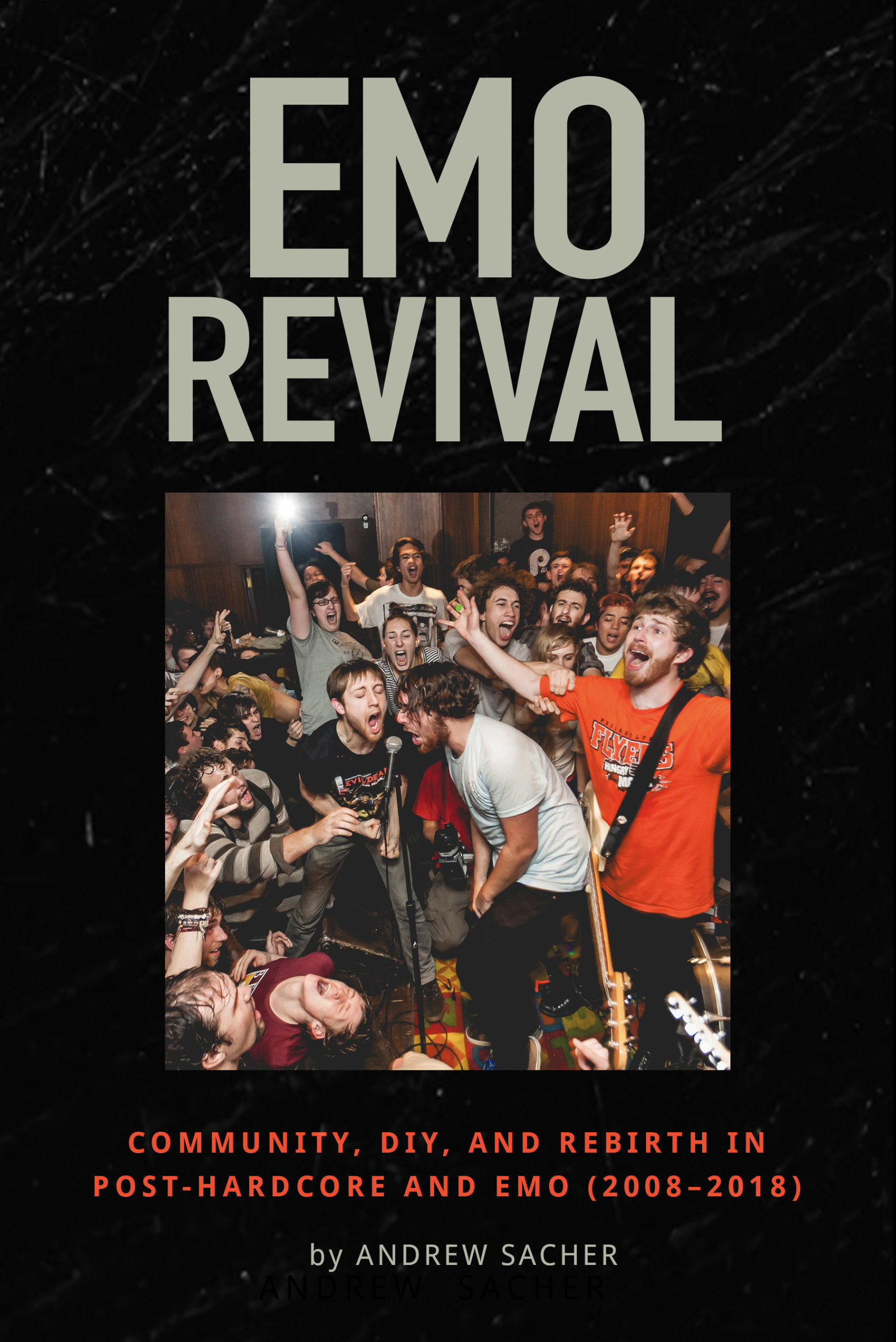
Emo Revival: Community, DIY, and Rebirth in Post-Hardcore and Emo (2008–2018)
Order the bookPraise for Emo Revival
“An overdue modernization of emo history, told by one of the few writers on Earth who was on the front lines for all of it, documenting with accuracy and a true love of the music.”
Dan Ozzi, author of SELLOUT: The Major-Label Feeding Frenzy That Swept Punk, Emo, and Hardcore (1994 - 2007)
“Sacher captures the magic and the chaos of the bust years of underground music as well as the excitement of making it up yourself when everyone's stopped looking for the next big thing. This book is a passionate in-depth look at the bands who brought the best parts of DIY out of the basements and back to the forefront of youth culture.”
Geoff Rickly, singer of Thursday and author of Someone Who Isn't Me
“Deeply personal and moving. Andrew did an incredible job at highlighting an era that felt exciting and new. Cannot recommend it enough.”
Michael York, member of Pianos Become the Teeth
Press
- "Essential" — Stereogum
- "For a fourth-wave emo fan, this is the holy text. 8/10" — PopMatters
- "A strong case for the 'music book of the year'" — Chorus.fm
- "Sacher's interviews are informative, his knowledge of various scenes encyclopedic, and his love of the genre evident. More than anything else, Sacher's writing makes you feel like you were part of the movement." — Swim Into the Sound
- "A lot of music books write about older music. It's harder to do stuff from the last 20 years... but Andrew has managed to capture that." — Indiecast
Synopsis
The story of the reinvention of punk rock's most misunderstood subgenre, featuring Algernon Cadwallader, Title Fight, Modern Baseball, and the dozens of other bands who saved emo from implosion.
Emo didn't start with the rise of bands like Fall Out Boy and My Chemical Romance and it didn't end with their turn-of-the-2010s drop-offs either. When emo faded from the mainstream, major players in the music industry were ready to move on. The genre looked like a fad that was passing. But it didn't die; it went back to the basements and VFW halls that it began in decades earlier, fueled by a new crop of bands who kept emo alive when no one else would.
Andrew Sacher explores why and how these bands turned the fourth wave of emo into one of the most impactful underground rock movements of its time. Informed by over 80 original interviews, Sacher offers a deep dive into the generation of bands that restored the musical values and DIY ethos of emo's past in order to shape its future.
Emo Revival is a story about countless great records and powerful live shows, but even more so than that, it's a story about community. None of this would have happened without an influx of likeminded bands, record labels, show bookers, and fans who reinforced that “DIY” is really about doing it together.